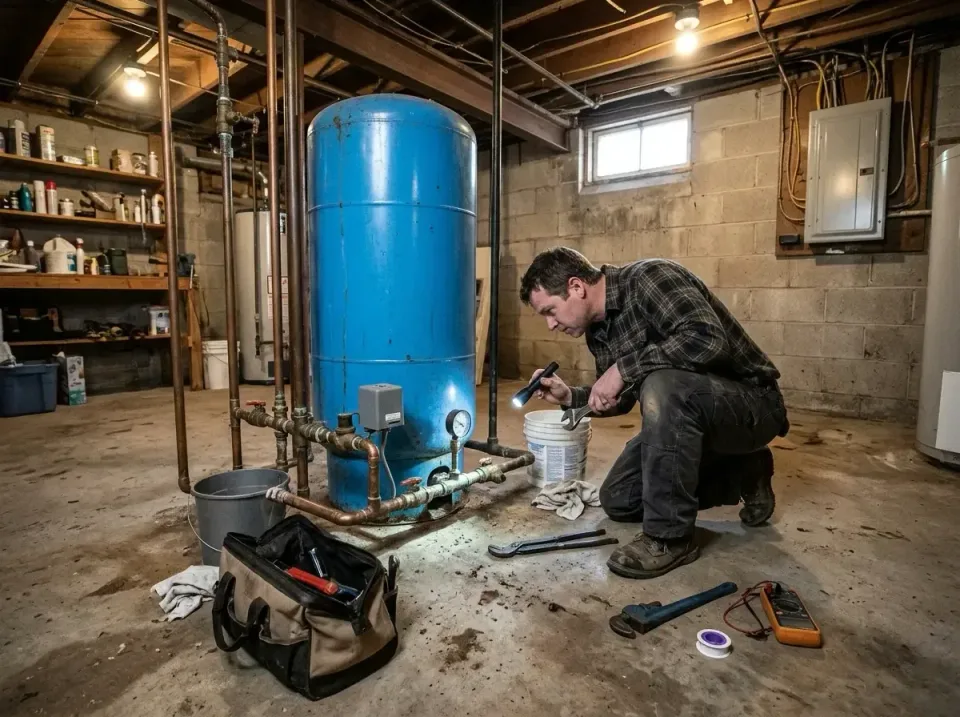
Water Booster Pump Installation
We install residential booster pumps sized to the water demand and electrical setup; typical jobs run $800–$2,500, depending on pump and electrical work.
Pressure that fades when an appliance starts often points to a supply system that cannot keep up with demand. A washer or dishwasher draws water while other fixtures are open, revealing a restriction, undersized supply, or weak pressure source. North Dakota’s low average humidity can mean more household water use for watering plants or other everyday needs, making a marginal system’s limits more noticeable.
At the North Dakota State Fair Center, water demand rises during busy events; at home, simultaneous uses can similarly expose a shortfall. Start by noting which fixtures slow and what equipment is running. We test the system under flow before recommending a repair. Small changes matter.
When a washer fills and a shower weakens, the system may be losing pressure across a restriction or failing to deliver enough flow. We compare pressure with fixtures closed and while the washer fills; the difference helps separate a supply problem from a fixture-specific issue.
A clogged filter, partially closed valve, corroded pipe, or failing regulator can limit the water reaching the rest of the home. The North Dakota State Capitol and North Dakota Heritage Center & State Museum are useful reference points for statewide service; our diagnostic approach is the same whether the home is in Bismarck or elsewhere in North Dakota.
A single faucet that stays weak points more toward a local obstruction. Several fixtures fading together suggests a shared supply issue.
Rural properties may rely on wells and pressure tanks, so appliance-related pressure loss can reflect a pump that cannot meet demand, a tank losing its cushion, or a pressure switch that is not operating correctly. Do not adjust switch settings by guesswork; settings must suit the well equipment.
Long winter freezes can freeze exposed water pipes, narrowing or stopping flow and sometimes causing damage that becomes apparent when demand rises. Check for visible frost or leaks, but do not thaw a pipe with an open flame. Our crew tests the system and explains the likely cause before work begins.
If one appliance causes a brief dip and other fixtures recover promptly, check its supply valves and clean only accessible screens according to the manufacturer’s instructions. Stop there if the pressure stays low, a pump cycles repeatedly, or water appears where it should not.
Dry indoor winter air can increase household water use, so several fixtures running at once may make a marginal system more obvious; reducing simultaneous use is a useful temporary check, not a repair. At the Dakota Zoo, animal care depends on dependable water; in a home, the practical test is whether several fixtures can run without a sustained loss.
We use a calibrated gauge and compare readings during flow rather than guessing from a shower alone.
If pressure falls across the house whenever appliances run, record which fixtures are open and whether the symptom affects hot water, cold water, or both. Similar drops on both sides suggest a shared supply or equipment issue; hot-only trouble can point to a restriction on the hot-water path.
A regulator that is not controlling downstream pressure, a failing well component, or a leak may need closer inspection. We check accessible valves, the pressure source, and system readings before recommending a repair.
For a closer look at well equipment, read our guide to why a well pump keeps cycling on and off. If the pressure loss began suddenly, our sudden pressure loss repair page explains the next diagnostic steps. North Dakota Plumbing Pros has served the state for more than 11 years, with a test-first approach.
The right check depends on whether the pressure drop appears throughout the home, near one appliance, or only on a well system. Interstate 94 connects communities where demand and supply conditions can differ, so readings should be taken at the property rather than assumed from another location.
Summer heat can raise outdoor water demand; note irrigation or other outdoor use when testing. Blizzards and drifting snow can delay service calls, so clear safe access to outdoor equipment when possible.
| Option | Best for | Key detail |
|---|---|---|
| Pressure regulator repair | Whole-home drops on a regulated supply | Common regulator settings are 40–80 psi; verify actual readings first. |
| Booster pump installation | Low supply pressure affecting multiple fixtures | Use a residential flow-rated model matched to demand. |
| Well pump repair | Pressure drops on a private well | Check pump operation under demand before replacing equipment. |
| Pressure tank repair | Well pressure that falls or fluctuates | Tank capacity should match system demand. |
| Fixture pressure troubleshooting | A single slow faucet or appliance | Residential supply piping commonly ranges from 1/2–1 inch. |
Heavy rain may increase sump pump demand, but that does not by itself diagnose a water-supply pressure problem. Garrison Dam is a regional landmark; at home, system-specific readings not proximity to a landmark guide the repair.
Before a visit, note which appliance triggers the drop and which fixtures lose flow. North Dakota’s continental climate brings cold winters and warm summers, so mention any seasonal change in the symptom; it can help narrow the inspection.
Downtown Minot is one point in our broad state service area, and access to equipment matters wherever the home is located. The Alerus Center hosts events that bring many people together; at home, record which uses overlap rather than trying to reproduce a pressure problem by running everything at once.
Record the symptoms: Write down the appliance, affected fixtures, and whether hot, cold, or both supplies weaken.
Clear equipment access: Move stored items away from the pressure tank, well equipment, and main shutoff.
Locate the shutoff: Identify the main water shutoff without turning unfamiliar valves.
Prepare the work area: Protect finished floors and keep the route to plumbing equipment clear.
Plan for a brief interruption: Coordinate with household members in case water must be turned off during testing.
Leave pump electrical work alone: Do not open or adjust powered equipment; confirm the area is accessible for inspection.
Check multiple fixtures afterward: Compare their flow once service is restored and report any remaining drop.
Pressure can fall when the combined flow demand exceeds what the supply system or a restricted pipe can deliver. Seasonal temperature swings affect pipe expansion and contraction, so if the symptom changes with the season, note that for the inspection; we compare pressure while water is flowing.
Water pressure testing is typically $75–$200, depending on diagnostic time and access to the plumbing and equipment. A calibrated pressure gauge can compare a static reading with residual pressure during flow, helping identify whether a regulator, well system, or another restriction needs attention.
Yes, you can check that accessible appliance supply valves are fully open and clean a removable inlet screen according to its manual. If several fixtures still weaken, a pump cycles repeatedly, or you see a leak, stop and contact North Dakota Plumbing Pros for a measured diagnosis; seasonal temperature swings can affect piping conditions.
Yes, plumbing work must follow the applicable North Dakota Plumbing Code; verify the current edition and requirements for the repair scope.
Yes, a pressure tank that is not supporting the well system properly can contribute to pressure loss when an appliance draws water.
A pressure drop during appliance use is a useful clue, but it does not identify the failed part by itself. Record the trigger and affected fixtures, then have the system tested under flow if the loss persists.
Rapid snowmelt can contribute to basement seepage, so mention any dampness near pipes or equipment during the inspection. For a measured diagnosis and practical repair recommendation, contact North Dakota Plumbing Pros at (877) 773-0781 or request low water pressure repair.
Pressure can fall when the combined flow demand exceeds what the supply system or a restricted pipe can deliver. Seasonal temperature swings affect pipe expansion and contraction, so if the symptom changes with the season, note that for the inspection; we compare pressure while water is flowing.
Water pressure testing is typically $75–$200, depending on diagnostic time and access to the plumbing and equipment. A calibrated pressure gauge can compare a static reading with residual pressure during flow, helping identify whether a regulator, well system, or another restriction needs attention.
Yes, you can check that accessible appliance supply valves are fully open and clean a removable inlet screen according to its manual. If several fixtures still weaken, a pump cycles repeatedly, or you see a leak, stop and contact North Dakota Plumbing Pros for a measured diagnosis; seasonal temperature swings can affect piping conditions.
Yes, plumbing work must follow the applicable North Dakota Plumbing Code; verify the current edition and requirements for the repair scope.
Yes, a pressure tank that is not supporting the well system properly can contribute to pressure loss when an appliance draws water.
Browse all nationwide service options and choose the right fit for your project.
We install residential booster pumps sized to the water demand and electrical setup; typical jobs run $800–$2,500, depending on pump and electrical work.
Pressure switch repair checks and replaces pump controls for homes and well systems; typical jobs run $150–$450, depending on switch type and access.
We repair residential booster pumps, including worn controls and pump components; repair scope and access shape the cost. Blizzards can delay visits, so clear snow near equipment.
We repair residential pressure tanks, checking tank capacity and connections; typical repairs or replacement run $300–$1,200, depending on tank size and access.
Well pump repair covers motor, wiring, and delivery faults for homeowners; typical repairs run $350–$1,800, depending on pump type, depth, and access.
We repair residential pressure regulators, checking valve size and access; replacement typically runs $250–$650. Downtown Grand Forks homes should consider Red River flood exposure.
We trace sudden whole-house pressure loss for homeowners, including accessible pipe and system checks; typical repairs run $150–$900, depending on pipe location and damage.
Low Shower Pressure Repair for homeowners with weak or fading shower flow; diagnosis and fixture access shape the job cost.
We trace weak hot-water flow in homes, including faucet restrictions and hot-side piping. Job cost depends on access and the repair scope.
We repair buried water service lines for homeowners, including accessible pipe sections and connections. Typical repairs may run $500–$3,000, depending on excavation access and pipe damage.
We clear and replace debris-clogged faucet aerators for homeowners; access, buildup, and replacement parts shape the typical $75–$150 job. Summer storms near Theodore Roosevelt National Park can make indoor faucet acc...
Burst Pipe Repair finds and replaces damaged supply pipe in homes and rentals; many straightforward repairs run about $200–$1,000, depending on access and damage.
We test residential and well-system pressure with a calibrated gauge; diagnostic time and access shape the typical charge.
Low well pressure diagnosis and repair for homeowners, including checks of the well system and pressure equipment; typical jobs run $250–$900 depending on access and parts.
We clear household drain and water-pipe blockages, including debris in accessible lines; typical jobs run $150–$600, depending on blockage location and access.
Low Sink Pressure Repair restores weak flow at residential sink fixtures; repair scope and access affect the typical $125–$350 cost.
Water Leak Repair for homeowners and property managers covers accessible pipe leaks and damaged sections; typical repairs run $150–$900, depending on pipe location and damage.
We repair residential filter housings and clogged cartridges; access and cartridge type shape the job. Typical repairs run about $150–$500.
We thaw and repair frozen household pipes, including accessible copper or plastic sections; typical jobs run $150–$1,000+, depending on access and pipe damage.
We repair residential water softeners with restricted-flow or valve issues; access to the unit and replacement-part needs shape the job estimate.
Select a city to find local low water pressure repair providers we cover in North Dakota.
Share your job scope for low water pressure repair in North Dakota — we will review fit and pricing before scheduling.