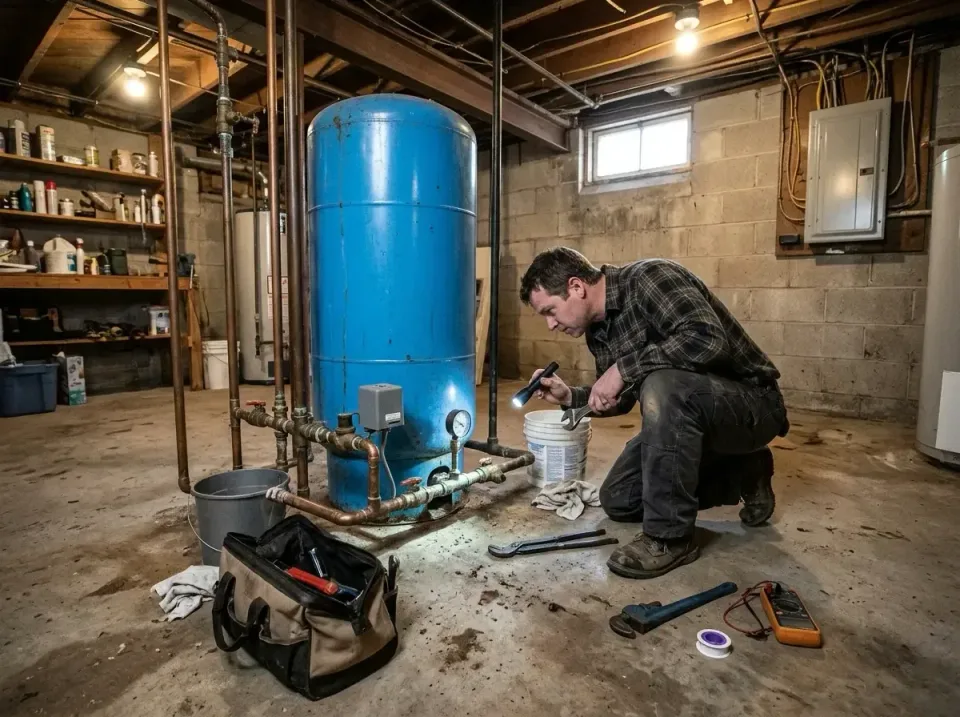
Water Booster Pump Installation
We install residential booster pumps sized to the water demand and electrical setup; typical jobs run $800–$2,500, depending on pump and electrical work.
Hot water that runs slower than cold usually points to a restriction on the hot side, not a whole-house pressure problem. Compare the same faucet on both settings, then check whether other hot taps behave the same way.
Cold weather matters here. Long freezes can freeze exposed water pipes, so a vulnerable pipe in an unheated area may narrow or stop flow; do not apply an open flame to thaw it.
Subzero cold also raises the risk of frozen service lines, though a service-line issue is more likely to affect cold and hot water together. We test before recommending a repair and explain what the readings and fixture checks show.
If only one faucet has weak hot flow, start with that fixture rather than assuming the house has a pressure problem. Mineral debris can collect in a faucet cartridge or a narrow passage, and a partially closed fixture stop can limit hot water while cold flow remains normal. Test the hot side at a second sink or tub. If it flows normally there, the restriction is probably local.
A simple check is to remove and rinse the aerator, if your faucet design allows it. Do not force a stuck fitting or take apart a valve you cannot confidently reassemble. We use that distinction before deciding what to inspect next.
When several hot taps are weak but their cold settings are normal, a shared hot-water component becomes more likely. The restriction may be near the water heater, in a hot-water shutoff, or in a section of supply piping. A narrowing or damaged line can reduce the flow rate even if the water system’s general pressure seems acceptable.
Summer heat can raise outdoor water demand; if the slowdown appears only during peak household use, note which other fixtures or appliances are running. Dry indoor winter air can also increase household water use, which may make an existing hot-side restriction more noticeable during busy periods.
Keep a short record of when the problem happens. It helps separate a constant obstruction from a flow issue that appears under demand.
Usually, no. A homeowner can compare fixtures, check accessible shutoff handles, and clean a removable aerator, but opening hot-water connections or working on a heater can expose you to hot water, leaks, or equipment-specific hazards. Stop if you see corrosion, a wet connection, or a valve that will not turn freely.
A property left unheated without proper preparation can develop frozen plumbing, and an unnoticed leak may cause damage before anyone returns. Our crew checks the affected fixtures and accessible piping, then tests the system before proposing work. If the hot-side issue is broad, we trace the likely restriction instead of installing equipment that may not address it.
Call a plumber when hot flow is weak at multiple fixtures, changes suddenly, or is accompanied by leaks, unusual pipe noise, or unreliable hot-water delivery. A calibrated gauge and controlled flow checks can help distinguish a pressure issue from a restriction in the hot-water path. One reading alone does not identify where the loss occurs.
For context on other household flow symptoms, see why water pressure drops when appliances run. If the problem also affects upper-level fixtures, our guide to weak upstairs faucets and booster pumps explains why testing the existing supply matters before choosing equipment. We document what changes between fixtures and under flow, explain the likely cause plainly, and confirm the scope before work begins.
The useful first choice depends on whether the weak flow is limited to one fixture or shared across the hot side. A quick check can narrow the search.
| Option | Best for | Key detail |
|---|---|---|
| Fixture pressure troubleshooting | One tap with weak hot flow | Compare hot and cold at that fixture, then compare another tap. |
| Pressure regulator repair | Hot and cold flow both seem affected | A regulator controls downstream pressure; common settings are 40–80 psi. |
| Well pump repair | A well-supplied home has broader pressure trouble | A booster pump is not a substitute for diagnosing the existing supply. |
| Water service line repair | Both hot and cold flow change across the home | Residential supply piping is commonly 1/2–1 inch; confirm the affected segment first. |
North Dakota’s low average humidity can encourage more indoor water use, so note whether the symptom worsens during heavy household demand. Heavy rain may increase sump pump demand, but sump operation alone does not prove the hot-water line is restricted. Choose a repair only after the cause is narrowed.
If the shower turns weak on hot while nearby cold taps stay normal, write down which fixtures show the same change. That pattern gives the plumber a useful starting point.
Schedule with details: Tell us whether the issue affects one hot tap or several, and when you first noticed it.
Clear access: Move stored items away from the water heater and visible hot-water piping so the inspection can proceed safely.
Keep the area accessible: Heavy snowfall can obstruct outdoor plumbing access; clear a safe path to relevant exterior equipment when conditions allow.
Avoid risky adjustments: Do not force shutoff valves or open heater connections; leave electrical or equipment work to a qualified professional.
Show the symptom: Demonstrate hot and cold flow at the affected fixture, then at a second fixture.
Confirm the plan: Ask what the inspection found, what work is proposed, and whether the water will need to be shut off temporarily.
Alerus Center, Enchanted Highway, Fort Union Trading Post National Historic Site, Jamestown Reservoir, and Kirkwood Mall are distinct North Dakota reference points, not substitutes for a site-specific assessment. For your visit, prioritize clear access and a plain description of the symptom.
A single faucet with weak hot flow often has a local restriction, such as debris in its cartridge or a partly closed fixture stop. Rural properties may rely on wells and pressure tanks, but that does not make a one-faucet symptom a well problem; compare another hot tap before drawing that conclusion.
Yes, a shower-only slowdown can come from a restriction at the shower valve or fixture rather than a whole-home supply fault. If you also notice weak hot flow at sinks, ask for Water Pressure Testing; the pressure testing range is $75–$200, with diagnostic time and access affecting the quote.
Water Pressure Repair before calling a plumber?
You can compare hot and cold flow at multiple fixtures and clean a removable aerator, but stop if the symptom involves several hot taps, a leak, or a stuck valve. A home near the Knife River Indian Villages National Historic Site still needs the same fixture-by-fixture diagnosis; the landmark does not determine the cause.
The North Dakota Plumbing Code edition should also be verified for the job; North Dakota Century Code Chapter 43-18 covers plumber licensing.
Pressure Tank Repair may help when a well system has broader pressure trouble, but it is less likely to solve a restriction isolated to hot water at one fixture. Homes near Dakota Zoo or elsewhere in the region should still be evaluated by symptom pattern; rural properties may use wells and tanks, so tell the plumber what other taps do.
A hot tap that runs slower than its cold setting often has a restriction somewhere on the hot-water side, especially when other cold fixtures work normally. If several hot fixtures are affected, or the change is sudden, have the system checked rather than guessing at a replacement. Blizzards and drifting snow can delay service calls, so share access concerns when scheduling and keep the route to the plumbing equipment clear when safe.
Garrison Dam, Lake Sakakawea, and the International Peace Garden are well-known North Dakota destinations; for a home plumbing visit, the useful details are the affected fixtures and when the flow changes. Tell our team whether one tap or the whole hot side is involved.
North Dakota Plumbing Pros can inspect the flow and explain the findings before work begins. Request Low Hot Water Pressure Repair to arrange a practical next step.
A single faucet with weak hot flow often has a local restriction, such as debris in its cartridge or a partly closed fixture stop. Rural properties may rely on wells and pressure tanks, but that does not make a one-faucet symptom a well problem; compare another hot tap before drawing that conclusion.
Yes, a shower-only slowdown can come from a restriction at the shower valve or fixture rather than a whole-home supply fault. If you also notice weak hot flow at sinks, ask for Water Pressure Testing; the pressure testing range is $75–$200, with diagnostic time and access affecting the quote.
You can compare hot and cold flow at multiple fixtures and clean a removable aerator, but stop if the symptom involves several hot taps, a leak, or a stuck valve. A home near the Knife River Indian Villages National Historic Site still needs the same fixture-by-fixture diagnosis; the landmark does not determine the cause.
The North Dakota Plumbing Code edition should also be verified for the job; North Dakota Century Code Chapter 43-18 covers plumber licensing.
Pressure Tank Repair may help when a well system has broader pressure trouble, but it is less likely to solve a restriction isolated to hot water at one fixture. Homes near Dakota Zoo or elsewhere in the region should still be evaluated by symptom pattern; rural properties may use wells and tanks, so tell the plumber what other taps do.
Browse all nationwide service options and choose the right fit for your project.
We install residential booster pumps sized to the water demand and electrical setup; typical jobs run $800–$2,500, depending on pump and electrical work.
Pressure switch repair checks and replaces pump controls for homes and well systems; typical jobs run $150–$450, depending on switch type and access.
We repair residential booster pumps, including worn controls and pump components; repair scope and access shape the cost. Blizzards can delay visits, so clear snow near equipment.
We repair residential pressure tanks, checking tank capacity and connections; typical repairs or replacement run $300–$1,200, depending on tank size and access.
Well pump repair covers motor, wiring, and delivery faults for homeowners; typical repairs run $350–$1,800, depending on pump type, depth, and access.
We repair residential pressure regulators, checking valve size and access; replacement typically runs $250–$650. Downtown Grand Forks homes should consider Red River flood exposure.
We trace sudden whole-house pressure loss for homeowners, including accessible pipe and system checks; typical repairs run $150–$900, depending on pipe location and damage.
Low Shower Pressure Repair for homeowners with weak or fading shower flow; diagnosis and fixture access shape the job cost.
We trace weak hot-water flow in homes, including faucet restrictions and hot-side piping. Job cost depends on access and the repair scope.
We repair buried water service lines for homeowners, including accessible pipe sections and connections. Typical repairs may run $500–$3,000, depending on excavation access and pipe damage.
We clear and replace debris-clogged faucet aerators for homeowners; access, buildup, and replacement parts shape the typical $75–$150 job. Summer storms near Theodore Roosevelt National Park can make indoor faucet acc...
Burst Pipe Repair finds and replaces damaged supply pipe in homes and rentals; many straightforward repairs run about $200–$1,000, depending on access and damage.
We test residential and well-system pressure with a calibrated gauge; diagnostic time and access shape the typical charge.
Low well pressure diagnosis and repair for homeowners, including checks of the well system and pressure equipment; typical jobs run $250–$900 depending on access and parts.
We clear household drain and water-pipe blockages, including debris in accessible lines; typical jobs run $150–$600, depending on blockage location and access.
Low Sink Pressure Repair restores weak flow at residential sink fixtures; repair scope and access affect the typical $125–$350 cost.
Water Leak Repair for homeowners and property managers covers accessible pipe leaks and damaged sections; typical repairs run $150–$900, depending on pipe location and damage.
We repair residential filter housings and clogged cartridges; access and cartridge type shape the job. Typical repairs run about $150–$500.
We thaw and repair frozen household pipes, including accessible copper or plastic sections; typical jobs run $150–$1,000+, depending on access and pipe damage.
We repair residential water softeners with restricted-flow or valve issues; access to the unit and replacement-part needs shape the job estimate.
Select a city to find local low water pressure repair providers we cover in North Dakota.
Share your job scope for low water pressure repair in North Dakota — we will review fit and pricing before scheduling.