Pressure Tank Repair
We repair residential pressure tanks, checking tank capacity and connections; typical repairs or replacement run $300–$1,200, depending on tank size and access.
A sudden drop at every tap can point to a leak, a failed pressure component, or a frozen section of pipe not just a weak shower. North Dakota Plumbing Pros handles sudden pressure loss across North Dakota, helping homeowners identify the cause before a small disruption spreads.
Browse all service options available across North Dakota and choose the right fit for your project.
We repair residential pressure tanks, checking tank capacity and connections; typical repairs or replacement run $300–$1,200, depending on tank size and access.
Burst Pipe Repair finds and replaces damaged supply pipe in homes and rentals; many straightforward repairs run about $200–$1,000, depending on access and damage.
We test residential and well-system pressure with a calibrated gauge; diagnostic time and access shape the typical charge.
Low well pressure diagnosis and repair for homeowners, including checks of the well system and pressure equipment; typical jobs run $250–$900 depending on access and parts.
Water Leak Repair for homeowners and property managers covers accessible pipe leaks and damaged sections; typical repairs run $150–$900, depending on pipe location and damage.
We repair residential water softeners with restricted-flow or valve issues; access to the unit and replacement-part needs shape the job estimate.
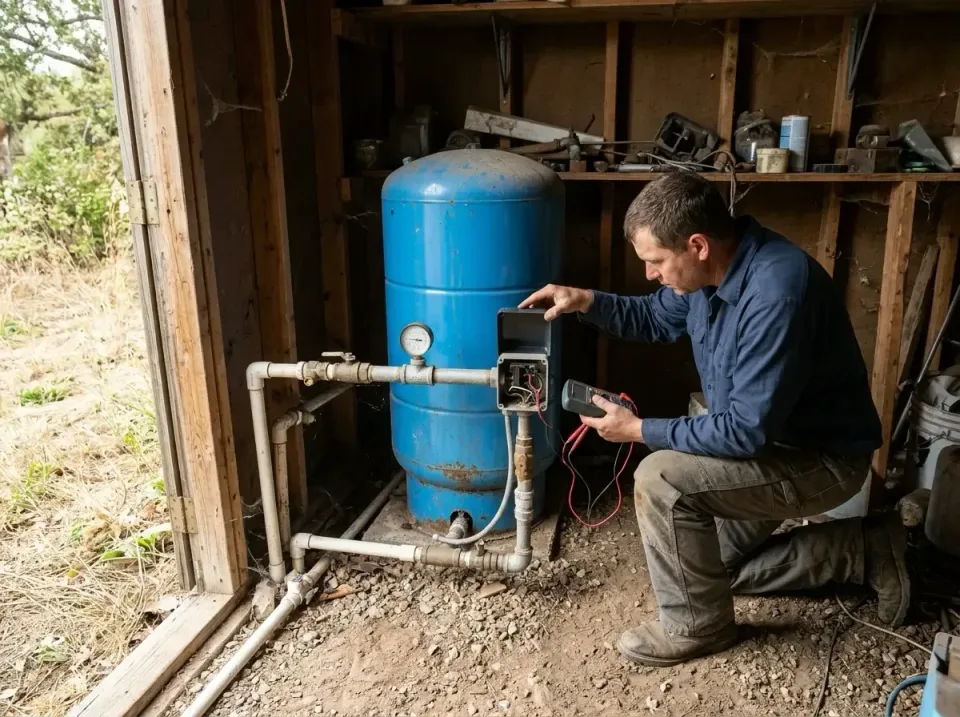
A sudden pressure drop across several fixtures needs a measured diagnosis, not a guess. Our crew uses a calibrated gauge to compare pressure readings and locate where the system loses force before recommending a repair.
Rural properties may rely on a well and pressure tank, so a change in stored pressure can affect the whole house. Dry indoor winter air can also lead households to use more water, making an existing supply problem more noticeable. Blizzards and drifting snow can delay service calls or block access to outdoor plumbing, so clear a safe path when possible.
We explain what we find, confirm the work scope, and then proceed only with your approval. For a scope review, call (877) 773-0781.
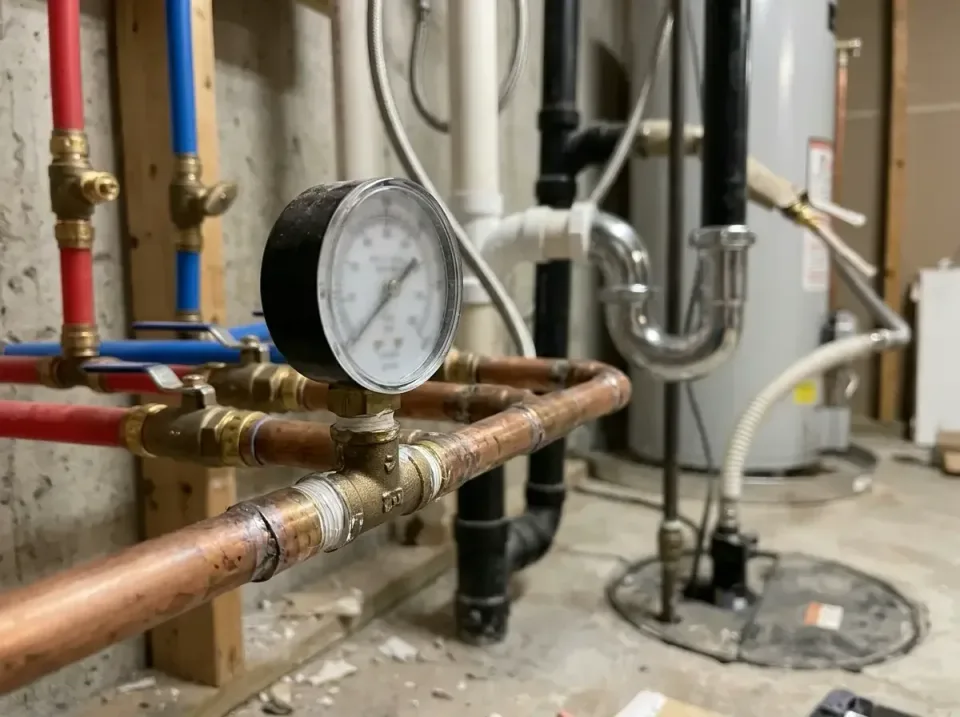
We begin by asking which fixtures changed and when, then check accessible parts of the water system. That gives us a useful baseline before opening or adjusting anything.
We record the reported symptoms and inspect visible plumbing for signs of a leak or damage.
We take pressure readings with a calibrated gauge, noting that readings can change with demand and elevation.
We compare the findings with the fixtures affected and explain the likely source in plain language.
We confirm the repair scope with you before work begins, then check the system again after the repair.
A clear route to the meter and mechanical area helps us work efficiently. In Grand Forks, Red River flood risk makes it especially useful to report any recent water intrusion alongside the pressure change.
At Garrison Dam, changing water conditions are part of the region’s broader water context, but a home’s pressure cause must be established on site. We can also discuss how heavy rain may raise sump pump demand when water is entering a basement.
A sudden drop at a home near the North Dakota State Capitol can tempt an owner to turn valves or replace parts without knowing what failed. That can hide the original problem. We test before recommending repairs.
A rushed adjustment may change pressure without correcting a leak or restriction. Our crew records what we observe, checks relevant components, and explains which findings support the proposed work.
Spring freeze-thaw cycles can stress buried pipes, so we ask whether the pressure change followed a thaw rather than treating the timing as coincidence. Near Pembina State Museum, seasonal conditions still do not prove a buried pipe is damaged; testing and inspection do.
Summer thunderstorms can bring intense rainfall, which may make wet areas harder to interpret if seepage is also present. We separate observed symptoms from assumptions, confirm access and scope, and discuss applicable requirements before starting. If pressure changed after visiting Theodore Roosevelt National Park or another extended absence, tell us when the home was last used and what you noticed.
When pressure drops throughout a home, the price depends first on finding the source and reaching the affected plumbing. A diagnostic pressure test commonly runs $75–$200; time on site and access to the system affect that charge. If the confirmed repair involves a pressure-control valve, replacement commonly runs $250–$650, depending on valve size and access.
Well-system work can differ: pressure tank repair or replacement commonly falls between $300 and $1,200, with capacity affecting the scope. A separate leak repair may run $150–$900 depending on pipe location and damage. Those are different repair possibilities, not automatic add-ons.
Interstate 94 and U.S. Highway 2 connect communities across the state, but travel distance does not determine the plumbing scope; the confirmed site conditions do.
At the National Buffalo Museum, visitors see a regional landmark, while homeowners planning repairs should focus on access and the affected equipment. Estimates vary by parts, access, and site conditions; final quotes depend on the confirmed scope. Call (877) 773-0781 for a job-specific quote.
Warning signs
Air spitting from taps can be an early warning sign. Note which fixtures sputter and whether it happens repeatedly. Share that pattern with the technician; it can help narrow down where to investigate before the pressure loss becomes more disruptive.
New water stains on a ceiling, wall, or floor may point to moisture where it should not be. Watch for spreading marks or damp surfaces, and mention them when requesting service. A hidden leak can affect plumbing and deserves prompt attention.
Before you hire
Confirming the provider’s licensing helps you check that the company is qualified to perform plumbing work in the state. North Dakota Plumbing Pros is a North Dakota-licensed plumbing contractor; ask what permits apply to the work at your property.
Statewide routes can involve long drives, so it helps to understand the service schedule before making plans.
Reviewing the terms helps you understand the agreed scope, how changes are handled, and what responsibilities fall to you. Ask for explanations of any unclear contract language and confirm the plan before work starts.
For a sudden pressure drop, call North Dakota Plumbing Pros at (877) 773-0781 to review the symptoms and arrange a scope assessment.
Yes, long winter freezes can freeze exposed water pipes and restrict flow, so note any exposed plumbing near the affected area. Around Downtown Bismarck or elsewhere, an abrupt whole-house change needs inspection rather than an assumption that the pipe is frozen.
Yes, winterize a vacant property before an extended cold-weather absence and tell the plumber how long the home has been unoccupied. Downtown Grand Forks homeowners should also mention any change noticed before leaving, since an unused fixture can make a developing pressure issue less obvious.
Yes, repeated pump starts can accompany a pressure change, but the pattern alone does not identify the cause. If you are near the Fargodome or elsewhere in North Dakota, note how often the pump starts and whether pressure changes at several taps.
Tell us when the home was last occupied, which fixtures are affected, and whether the pressure changed before or after your trip. If you were away near Maah Daah Hey Trail, that timing can help distinguish a new symptom from one that developed during the absence.
Yes, the material and condition of the affected plumbing can shape the repair scope, especially in older homes near the North Dakota Heritage Center & State Museum or Plains Art Museum. Share any known repair history so the crew can assess the relevant materials and explain the proposed work.
Select a city to find local low water pressure repair providers we cover in North Dakota.